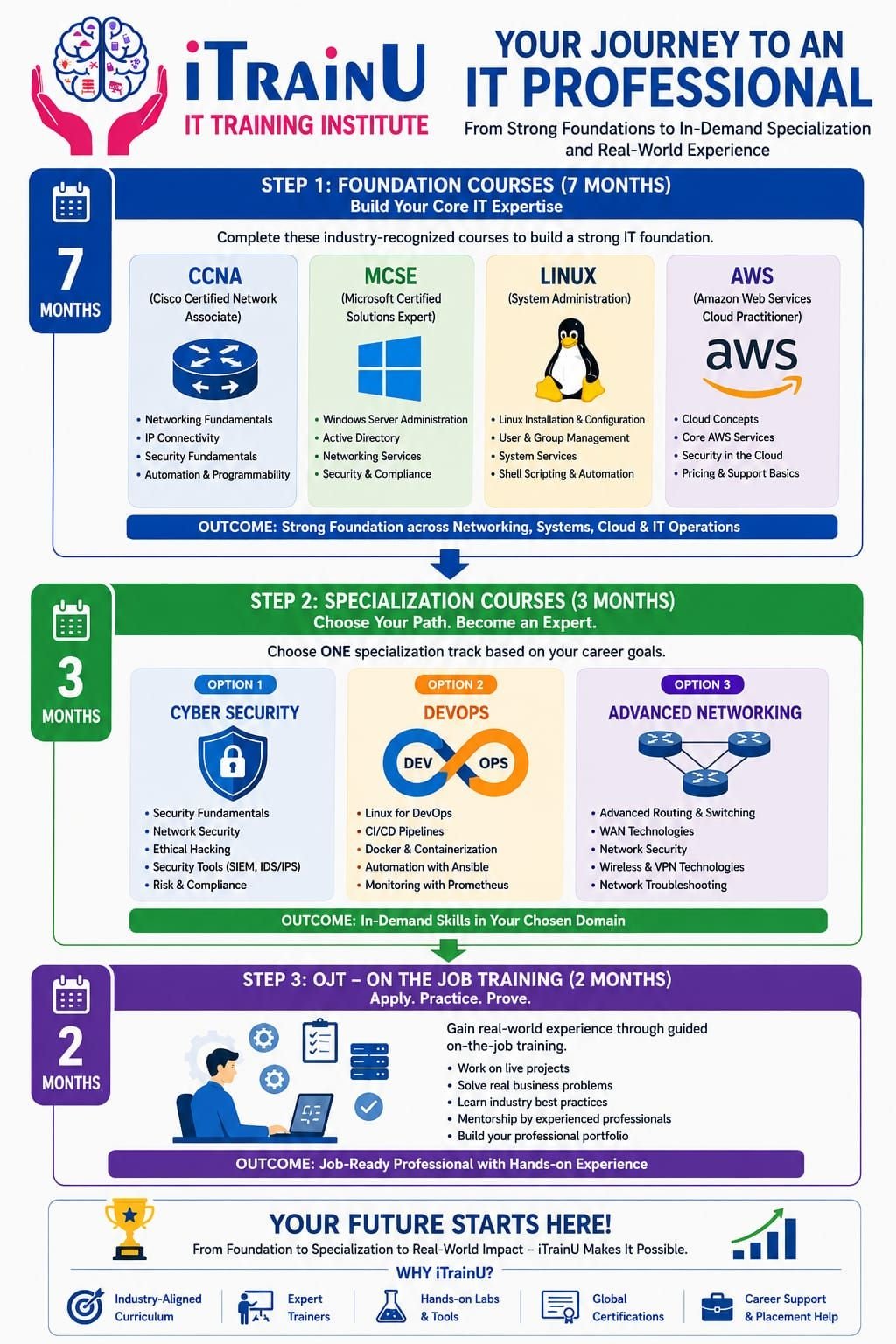
The tech world is shifting faster than ever. By 2026, cloud computing isn't just an "option" for businesses; it's the backbone of every modern industry. Microsoft Azure has become a dominant force in this space, especially for large enterprises. This means the demand for skilled Azure Cloud Engineers is at an all-time high, with salaries to match.
If you're looking to switch careers or upskill, you've probably seen many roadmaps. Maybe you've even looked at a full stack developer roadmap for beginners and wondered if coding is your only path. The good news? Cloud engineering offers a fantastic alternative with a focus on infrastructure, automation, and security.
In this guide, we'll break down the exact five steps you need to take to become a job-ready Azure Cloud Engineer in 2026.
Step 1: Learn the IT Foundations
Before you can manage the cloud, you need to understand the ground it's built on. An Azure Cloud Engineer is someone who manages virtualized data centers. You don't need a computer science degree, but you do need to understand how computers talk to each other.
Core Skills You Need:
- Operating Systems: You must be comfortable with Linux and Windows Server. Most cloud workloads run on Linux, while Azure has deep integration with Windows.
- Networking: Understanding IP addresses, DNS, subnets, and firewalls is mandatory. If you don't know how a packet moves from Point A to Point B, you'll struggle in the cloud.
- Virtualization: This is the technology that makes the cloud possible. It's the "magic" that lets one physical server act like twenty virtual ones.
- Basic Scripting: You don't need to be a software developer, but knowing some Python or PowerShell will save you hours of manual work.
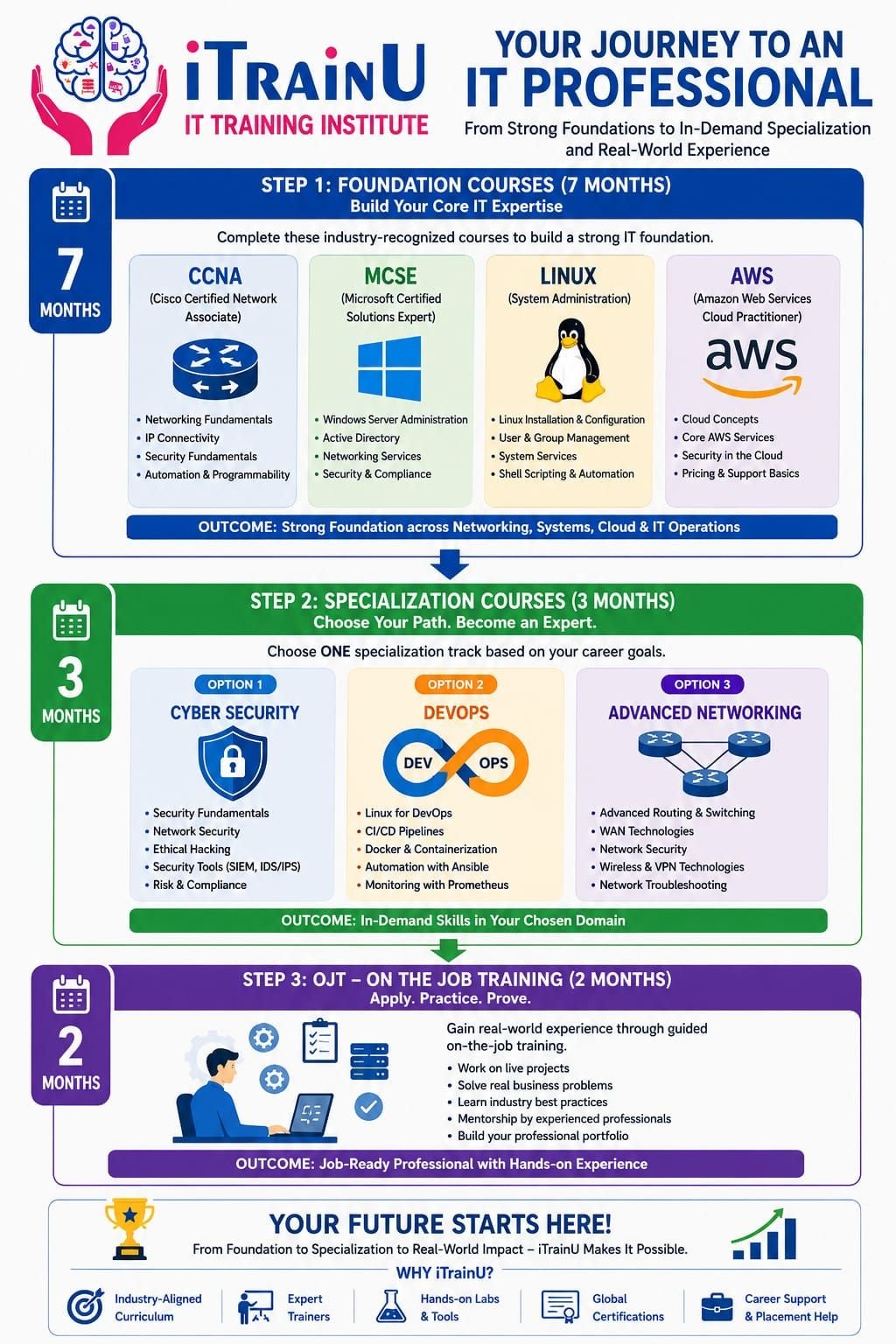
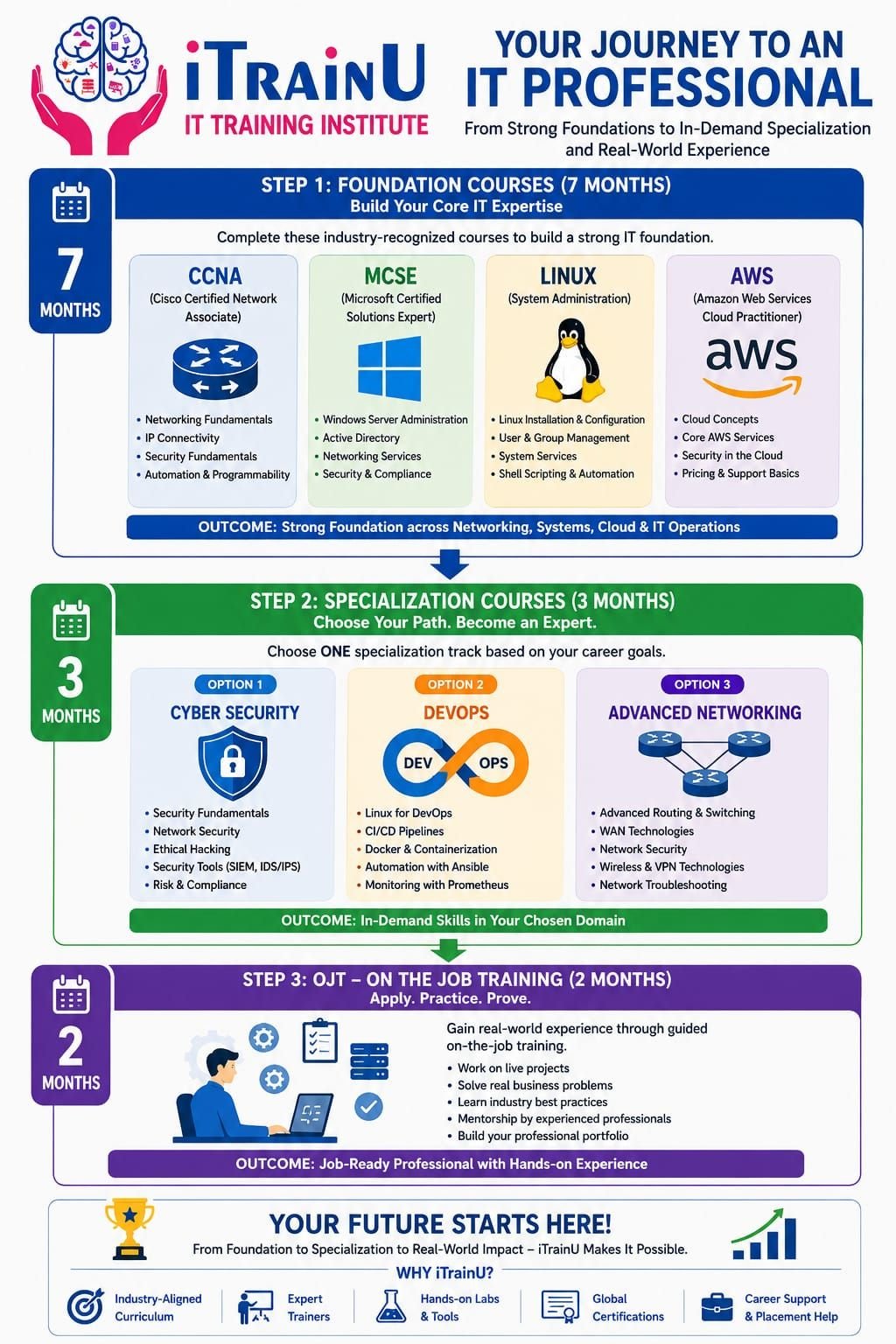
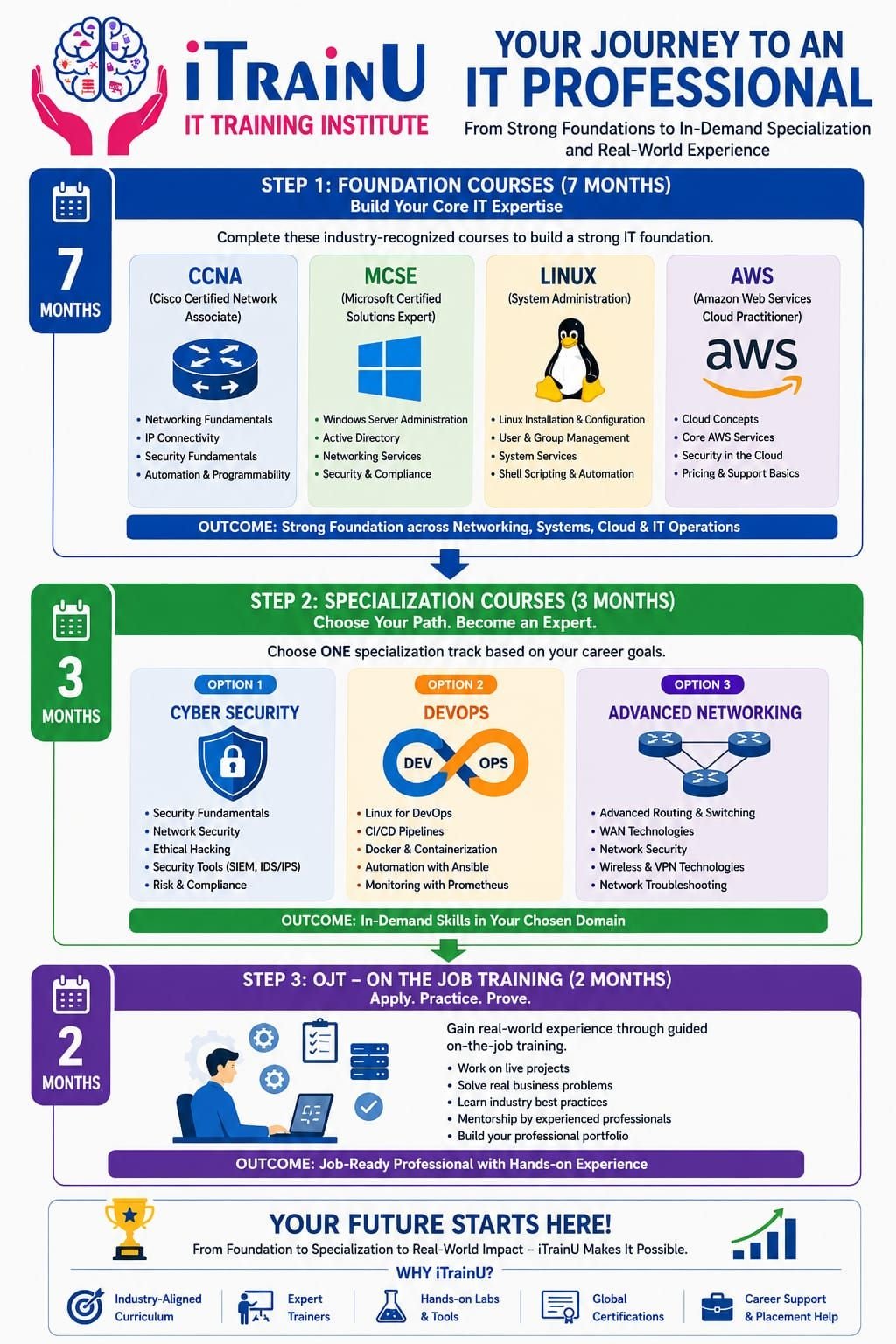
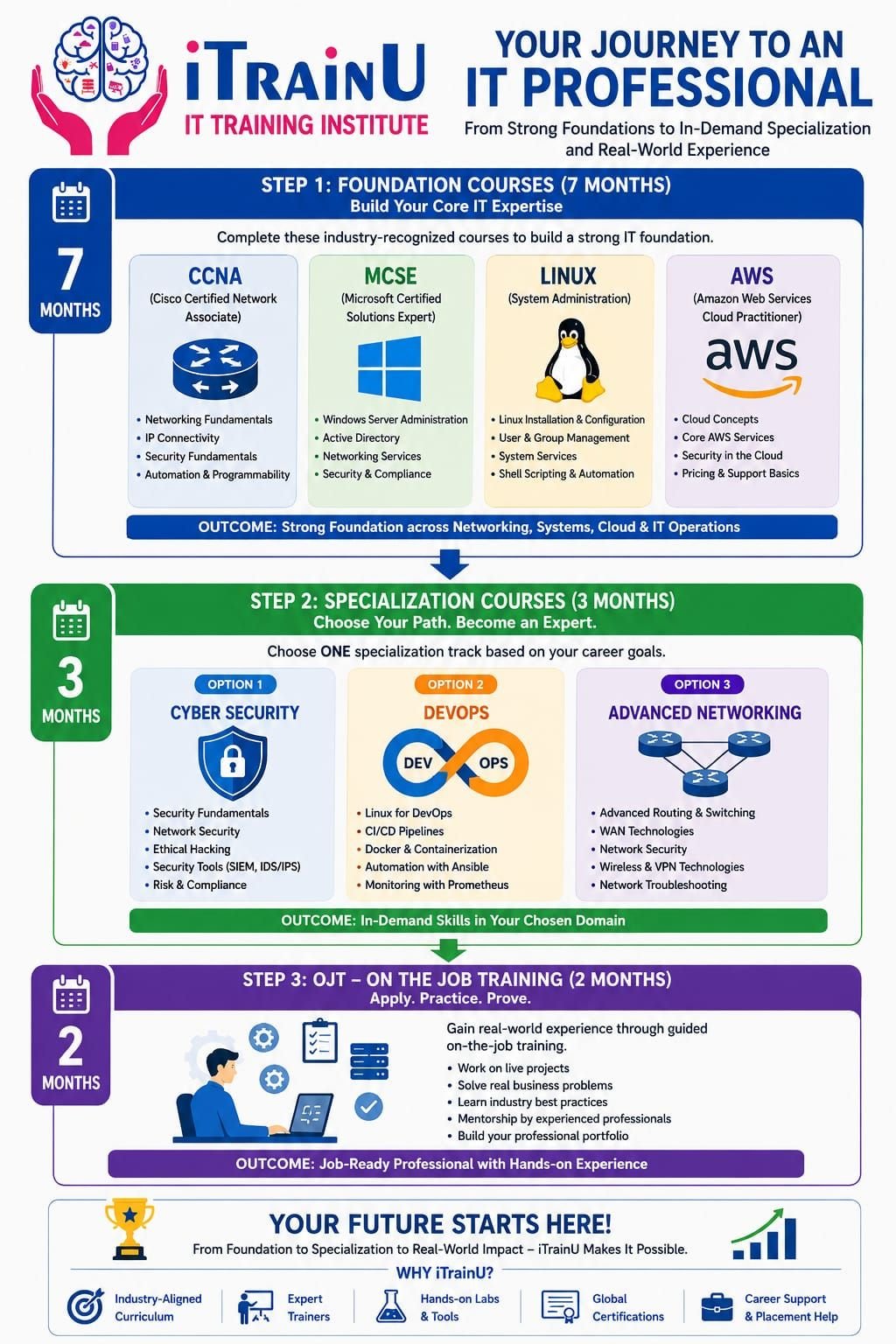
At iTrainU, we don't expect you to know this on day one. Our cloud computing training starts with these essentials to ensure your foundation is rock-solid.
Step 2: Ace the Azure Certifications
In the cloud industry, certifications are your "passport" to interviews. Microsoft has a very structured path that tells employers exactly what you know.

The 2026 Certification Roadmap:
- AZ-900 (Microsoft Azure Fundamentals): This is the entry point. It covers the basic vocabulary of the cloud, what is IaaS, PaaS, and SaaS? It's perfect for beginners to get their feet wet.
- AZ-104 (Microsoft Azure Administrator): This is the "Gold Standard" for engineers. It proves you can actually manage identities, storage, compute, and virtual networks. If you want a job, this is the one you need.
While some people look for an aws solution architect study guide 2026 to compare platforms, specializing in Azure gives you a massive advantage in corporate environments that already use Microsoft 365 or Windows.
Step 3: Master Hands-on Projects
Theory is great, but companies don't hire people who just "know" things, they hire people who can "do" things. You need to spend time in the Azure Portal.
What you control vs. What the provider manages:
Understanding the Shared Responsibility Model is key:
- The Provider (Microsoft) manages: The physical data centers, hardware, and the underlying virtualization layer.
- You (The Engineer) control: The virtual machines, data security, network configuration, and access permissions.

At iTrainU Institute, we provide hands-on labs where you build real-world scenarios. Instead of just reading about a Virtual Network (VNet), you'll actually build one, secure it with a firewall, and connect it to a database. This practical experience is what makes our students stand out during placements.
Step 4: Specialize in DevOps or Security
Once you have the basics down, it’s time to choose a "power-up." In 2026, companies aren't just looking for admins; they want specialists.
- The DevOps Path: Learn Infrastructure as Code (IaC) using tools like Terraform or Azure Bicep. If you've wondered how to become a devops engineer from scratch, mastering Azure Administration is the first 50% of that journey.
- The Security Path: Cloud security is a massive concern. If you have an interest in protection, you might also look into a cyber security course in indore with placement to complement your cloud skills. Learning how to harden an Azure environment makes you an invaluable asset.
Step 5: Build a Portfolio and Get Placed
The final step is proving your worth to recruiters. A 2026 resume needs more than just a list of skills; it needs a link to a GitHub repository or a portfolio website showing your projects.
Pro Tips for Your Portfolio:
- Automate Everything: Show a project where you deployed a website using a single script.
- Document Your Work: Write a short blog post or README file explaining why you chose a specific architecture.
- Highlight Cost Management: Show how you optimized an Azure environment to save money, businesses love saving money!

Why iTrainU for Your Azure Career?
Choosing where to learn is just as important as what you learn. At iTrainU, we focus on getting you "Industry Ready."
- Certified Trainers: Learn from experts with 10+ years of industry experience who know what's actually happening in the field today.
- 100% Placement Support: We don't just teach you; we help you get hired. Our placement cell works tirelessly to connect students with top IT firms.
- Real-World Labs: You get dedicated lab hours every day to practice what you've learned in class.
- Comprehensive Curriculum: From Linux basics to advanced Azure Architecture, we cover it all.

Sample Code: Deploying a Resource Group with Azure CLI
Here is a quick example of how an Azure Engineer uses automation to create a container for their resources:
# Login to your Azure account
az login

# Create a resource group in a specific region
az group create --name MyAzureProjectRG --location eastus

# Verify the creation
az group list --output table
Interview Questions for Azure Engineers
To help you prepare, here are three common questions you might face in 2026:
- What is the difference between Azure Availability Sets and Availability Zones?
- Answer: Availability Sets protect against hardware failures within a data center, while Availability Zones protect against the failure of an entire data center by distributing resources across different physical locations.
- How would you secure a public-facing Virtual Machine in Azure?
- Answer: I would use Network Security Groups (NSGs) to limit traffic, implement Just-In-Time (JIT) VM access, and ensure the VM is behind an Azure Firewall or Application Gateway.
- Explain the concept of "Infrastructure as Code" (IaC).
- Answer: IaC is the managing and provisioning of infrastructure through code instead of manual processes. This allows for version control, consistency, and rapid deployment.
Summary
Becoming an Azure Cloud Engineer in 2026 is a journey of five clear steps: mastering IT foundations, earning your AZ-104 certification, building hands-on projects, specializing in high-demand areas like DevOps, and finally, polishing your professional portfolio.
With the right guidance and a commitment to practical learning, you can secure a high-paying role in one of the most exciting sectors of the IT industry. Ready to start your journey? Contact us today at iTrainU and let’s build your future together!
FAQs
1. Do I need to be good at math to become a Cloud Engineer?
Not necessarily. While logical thinking is important, most day-to-day cloud engineering tasks involve architecture, networking, and automation rather than complex calculus.
2. How long does it take to get certified?
If you spend 2 hours a day, you can typically earn your AZ-900 in 4 weeks and your AZ-104 in another 8-12 weeks.
3. Can I get a cloud job as a fresher?
Yes! By focusing on hands-on projects and having a strong portfolio, freshers can land entry-level Cloud Administrator roles. iTrainU specializes in helping freshers bridge this gap.
4. Is Azure better than AWS?
Both are leaders. However, Azure is often preferred by large organizations that use Microsoft software, making it a very stable and high-paying career choice.
5. What is the average salary of an Azure Engineer in India?
In 2026, entry-level salaries typically range from ₹4 LPA to ₹8 LPA, while experienced professionals can easily earn ₹15 LPA to ₹25 LPA+.
Meta Title: 5 Steps to Become an Azure Cloud Engineer | 2026 Roadmap
Meta Description: Master the road to becoming an Azure Cloud Engineer in 2026. Learn about certifications, hands-on projects, and how iTrainU's placement support can launch your high-paying IT career.
Hashtags: #AzureCloud #CloudEngineer #ITCareers2026 #iTrainU #CloudComputing #TechRoadmap #IndoreIT