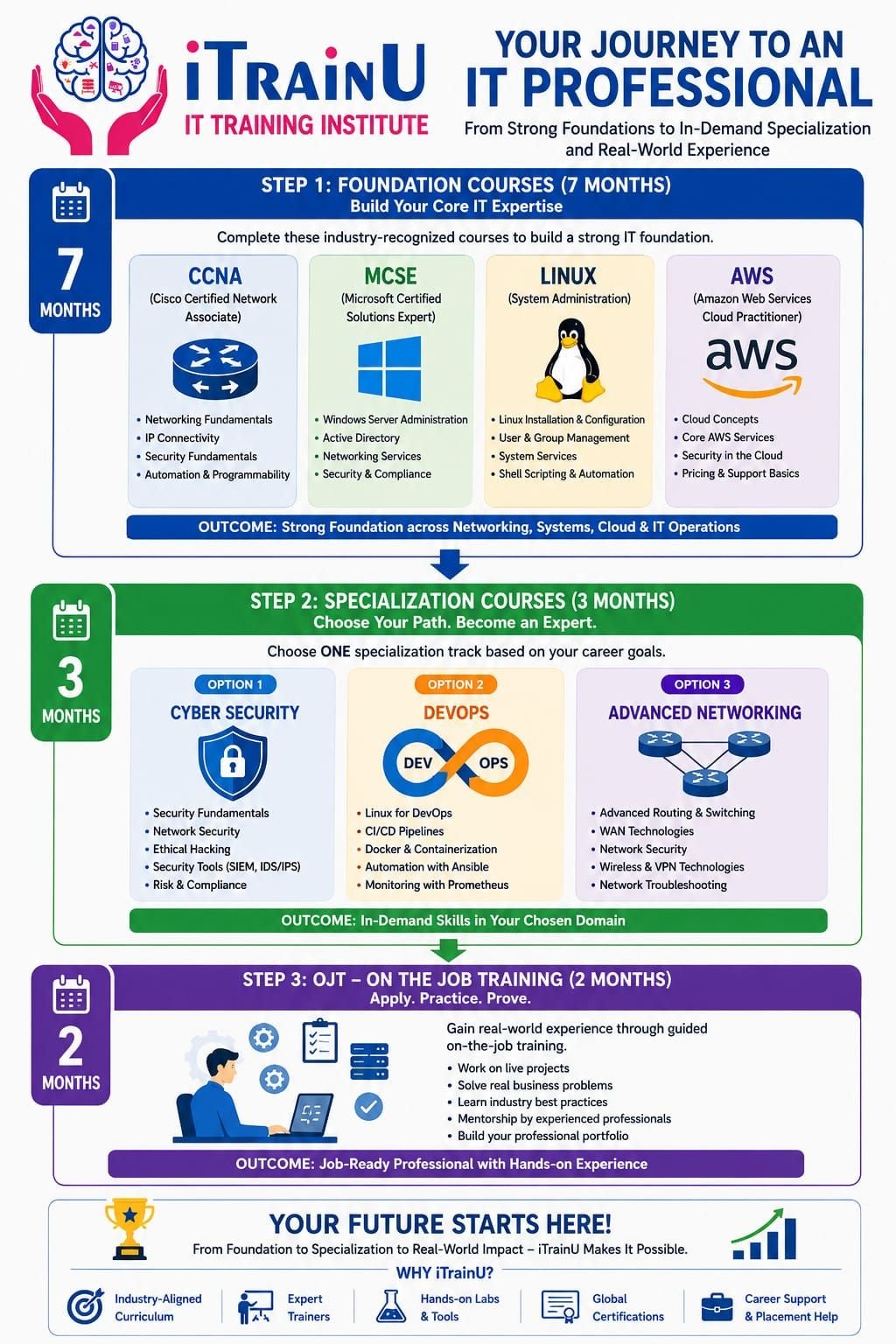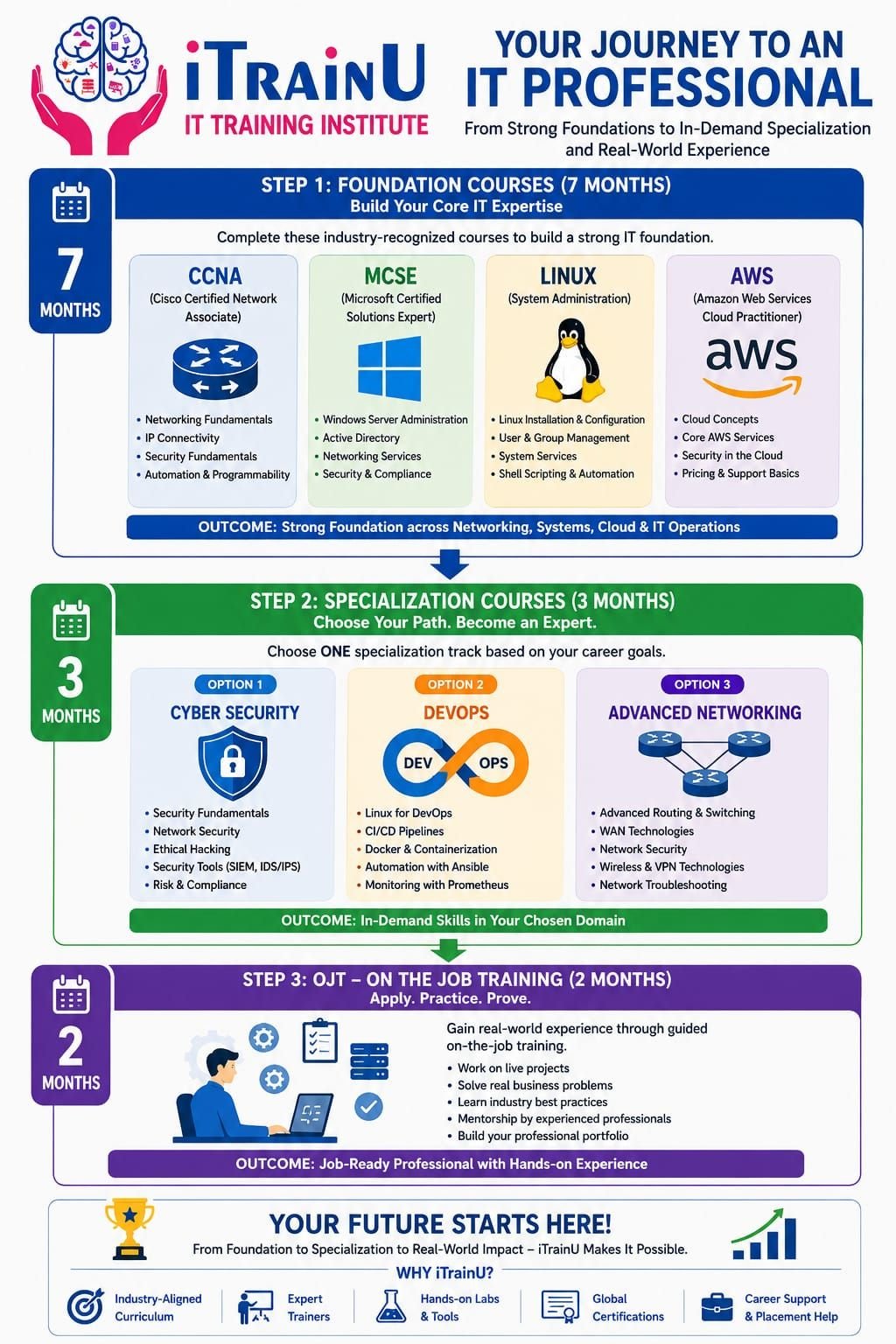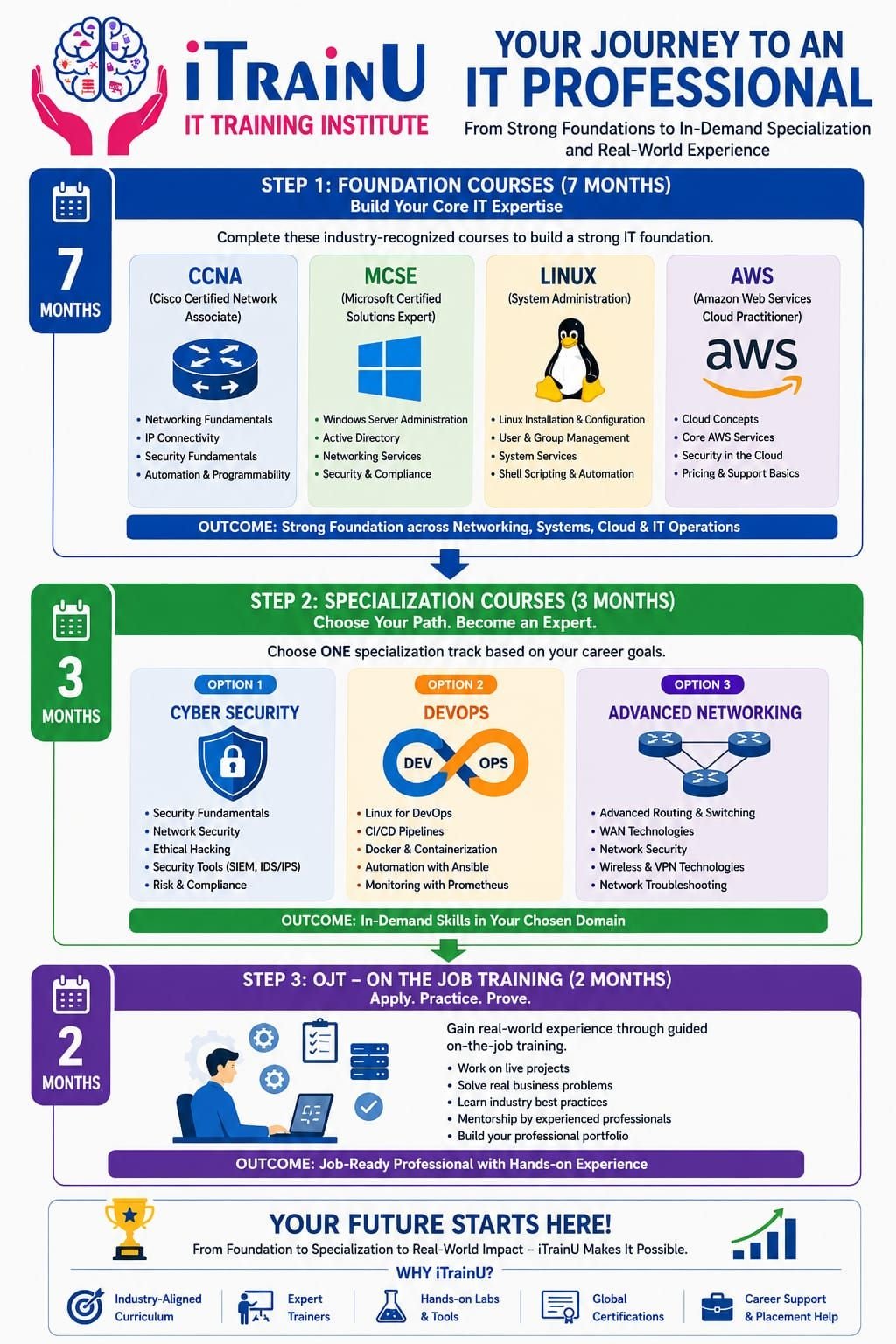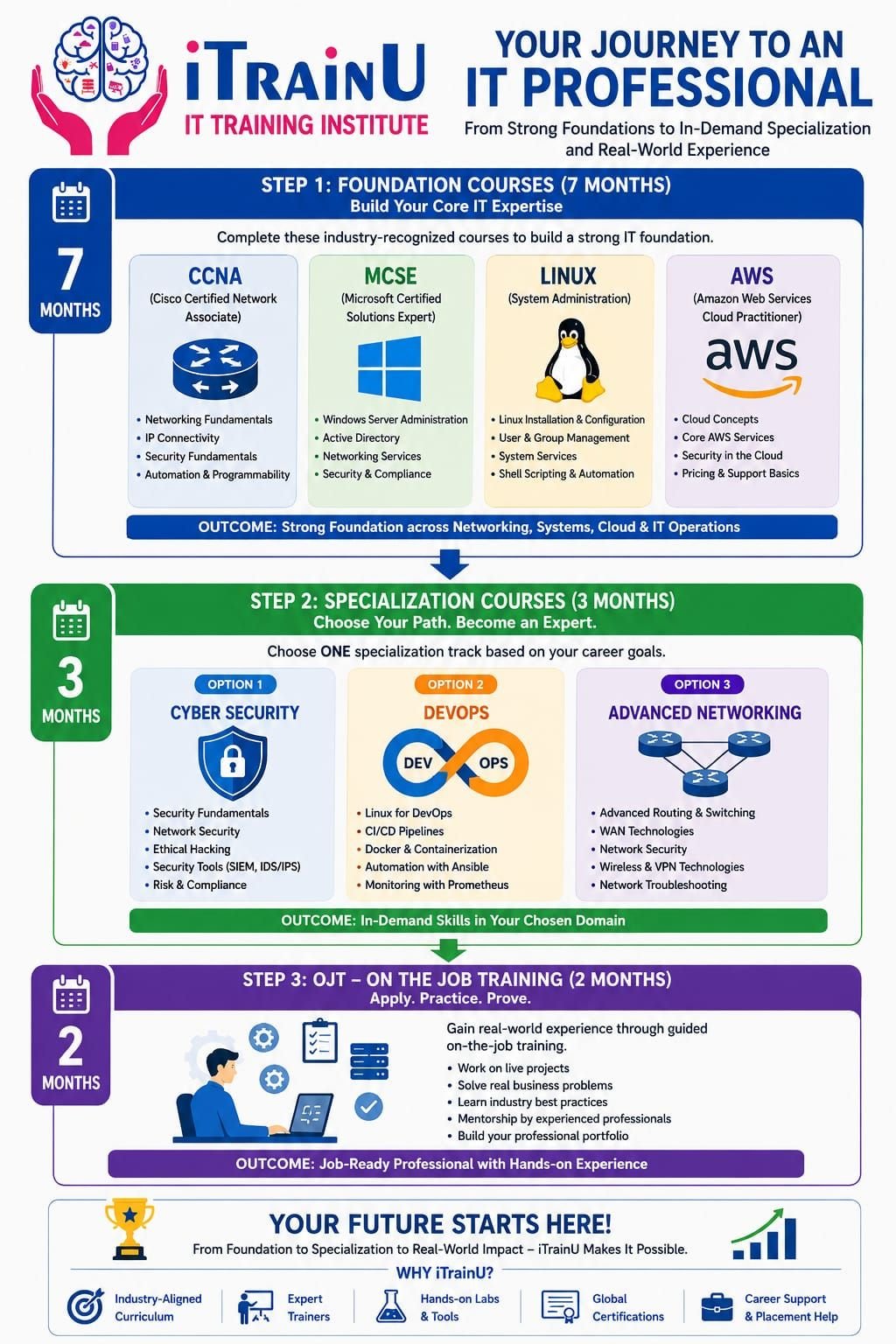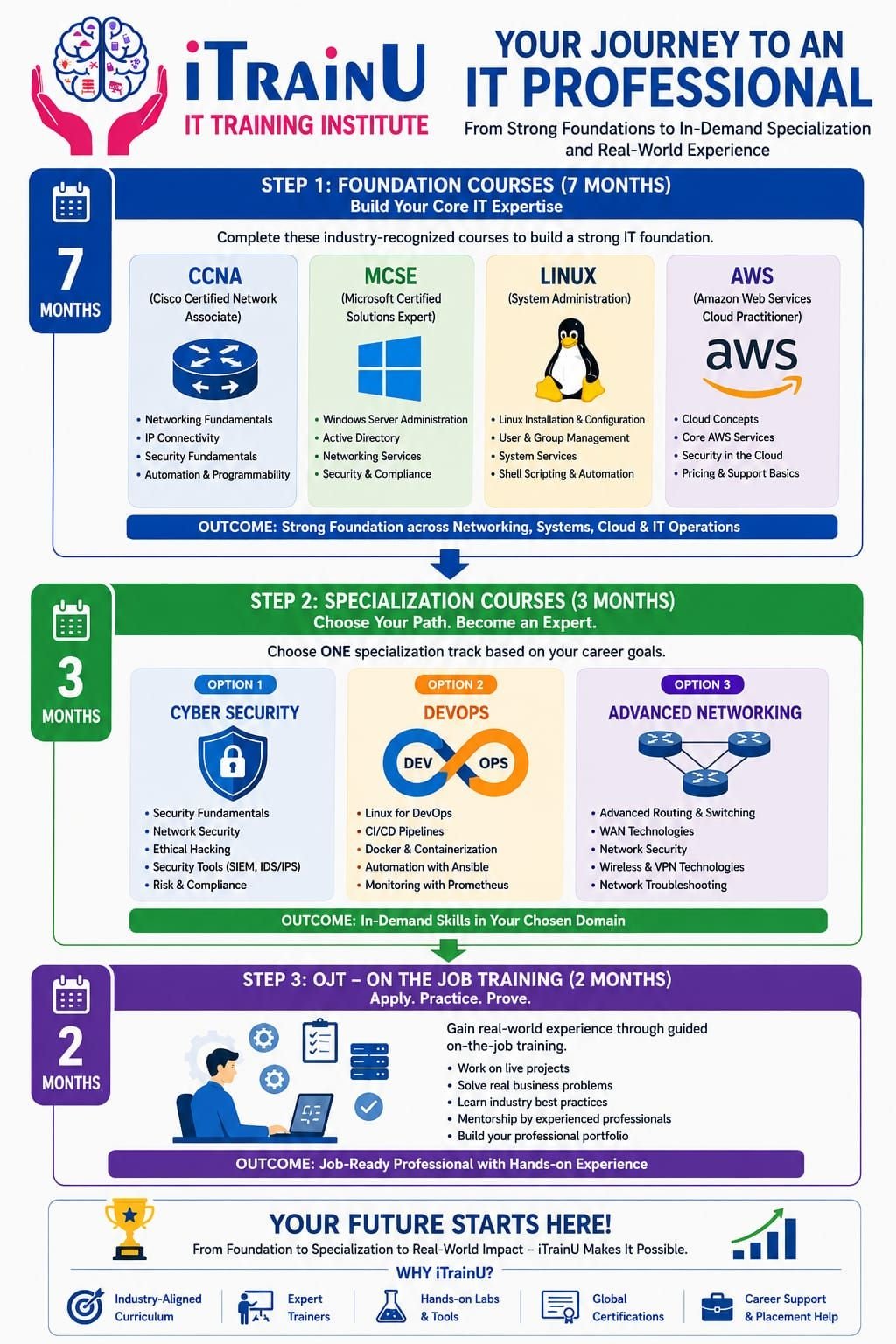
Starting a career in tech can feel overwhelming. If you've been looking for a path that combines coding, infrastructure, and automation, then DevOps is the place for you. In 2026, the demand for professionals who can bridge the gap between development and operations is higher than ever.
This guide will show you exactly how to become a devops engineer from scratch. Whether you're a student or a professional switching from a different field, this roadmap will help you master the skills needed for today’s fast-paced IT industry.
What is DevOps?
DevOps is a set of practices that combines software development (Dev) and IT operations (Ops). Its goal is to shorten the systems development life cycle and provide continuous delivery with high software quality.
Think of it like this: Developers build the "car" (the app), and Operations builds the "road" (the server). DevOps ensures the car can drive on the road as fast as possible without crashing.

Step 1: Master the Foundations (Linux & Networking)
Before you touch complex automation tools, you need to understand the environment where they live.
- Linux Operating System: Most DevOps tools and cloud servers run on Linux. You must learn command-line navigation, file permissions, and process management.
- Networking Basics: Understanding how data moves is vital. You should be familiar with IP addresses, DNS, HTTP/HTTPS, and ports.
At iTrainU, we start our students with best training institute for Linux in Indore modules to ensure your foundation is rock solid before moving to the cloud.
Step 2: Learn Version Control (Git & GitHub)
Git is a version control system that tracks changes in code. As a DevOps engineer, you won't just track application code; you'll track your infrastructure configuration too.
- What to learn: Branching, merging, pull requests, and resolving conflicts.
- Why it matters: It allows multiple teams to work on the same project without overwriting each other's work.
Step 3: Choose Your Cloud Provider
Modern DevOps is almost entirely cloud-based. You don't need to learn every platform, but you must master one.
- AWS (Amazon Web Services): The market leader with the most extensive features. If you're following an aws solution architect study guide 2026, you're on the right track.
- Azure (Microsoft): Highly popular among large enterprises.
- GCP (Google Cloud): Great for data-heavy and containerized applications.
Cloud Responsibility: What You Control vs. The Provider
Understanding the service model is crucial for any DevOps professional:
| Feature | What You Control (IaaS) | What the Provider Manages |
|---|---|---|
| Hardware | No control | Provider owns and maintains |
| Operating System | You choose and patch it | Provider ensures availability |
| Applications | You install and manage | No involvement from provider |
| Network Physicality | No control | Provider manages cables/routers |
Step 4: Containers and Orchestration (Docker & Kubernetes)
Docker is a tool that allows you to package an application with all its dependencies into a "container." This ensures the app runs the same on your laptop as it does on a production server.
Once you have many containers, you need Kubernetes. It is an orchestration platform that manages these containers, making sure they stay running and scale up when more users visit your app.

Step 5: Automation with CI/CD and IaC
This is where the "DevOps magic" happens. You'll learn to automate the boring stuff.
- CI/CD (Continuous Integration / Continuous Deployment): Tools like Jenkins or GitHub Actions automatically test and deploy your code whenever a change is made.
- Infrastructure as Code (IaC): Tools like Terraform allow you to write code to create servers. Instead of clicking buttons in a dashboard, you write a script.
If you're already looking at a full stack developer roadmap for beginners, adding CI/CD knowledge makes you a much more valuable hire.
Why Choose iTrainU for Your DevOps Journey?
Learning DevOps on your own is hard. At iTrainU, we provide a structured environment to help you succeed.
- Hands-on Labs: You don't just watch videos; you build real infrastructure in our live labs.
- Certified Trainers: Our instructors bring years of industry experience to the classroom.
- Placement Support: We don't just teach you; we help you get hired. We offer a cyber security course in indore with placement and similar guaranteed support for our DevOps students.
- Internships: Gain real-world experience through our internship programs.

Pro Tips for Aspiring DevOps Engineers
- Focus on Python: It’s the "glue" of DevOps. Use it for scripting and automation.
- Document Everything: A good DevOps engineer writes clear documentation so others can follow their automation scripts.
- Security First: Don't wait until the end to think about security. Learn "DevSecOps" from day one.
- Join a Community: Network with professionals on LinkedIn or local meetups.
Interview Questions: Are You Ready?
- What is the difference between a Container and a Virtual Machine?
- How does a CI/CD pipeline improve software quality?
- Explain the concept of "Infrastructure as Code."
- What happens when you type a URL into a browser? (Networking basics)
- How do you handle secrets (like passwords) in a Git repository? (Hint: Never commit them directly!)
Conclusion
Becoming a DevOps engineer from scratch in 2026 is a marathon, not a sprint. By following this roadmap: from Linux foundations to Kubernetes and AI-assisted automation: you're setting yourself up for a high-paying, future-proof career.
Ready to start? Visit iTrainU.in to explore our specialized training programs and take the first step toward becoming an industry-ready professional.
FAQs
1. Can I learn DevOps without knowing how to code?
You don't need to be a software developer, but you do need to understand basic scripting (like Python or Bash) to automate tasks effectively.
2. How long does it take to become a DevOps engineer?
With dedicated study and hands-on practice, most students can become job-ready in 6 to 9 months.
3. Is DevOps better than Cyber Security?
Both are excellent fields! If you love building and automating, choose DevOps. If you love defending and hunting for vulnerabilities, our cyber security course in indore with placement might be the better fit for you.
Hashtags
#DevOpsRoadmap2026 #CloudComputing #iTrainU #CareerChange #TechTraining #AWS #Kubernetes #IndoreIT
Local Training Information
- best training institute for devops in Indore
- devops training in Indore
- azure training in Indore
- AWS training in Indore
- best training institute for azure in Indore
- best training institute for AWS in Indore
- best training institute for cyber security in Indore
- cyber security training in Indore
- best training institute for CCNA Networking in Indore
- CCNA Networking training in Indore
- Linux training in Indore
- AI/ML training in Indore
- best training institute for Data Science in Indore
(Note: iTrainU also provides top-tier training in major cities globally, including Agra, Ahmedabad, Bangalore, Chicago, Dubai, London, New York City, Pune, and Singapore. Check our sitemap for the best training institute for azure, AWS, and DevOps in your specific location.)