The tech landscape is shifting rapidly. By 2026, the traditional requirement of a four-year computer science degree is becoming a relic of the past. Companies like Google, Amazon, and local tech leaders in India are now prioritizing skills, portfolios, and practical experience over formal diplomas.
If you are looking for a full stack developer roadmap for beginners, you've come to the right place. Whether you are a student, a career switcher, or a fresh graduate with a non-IT background, this guide will show you exactly how to build a career in tech from scratch using industry-oriented training and hands-on projects.
Why Full Stack Development in 2026?
A Full Stack Developer is a "jack of all trades" who can handle both the frontend (what users see) and the backend (the server-side logic and database). In 2026, the demand for versatile developers is higher than ever because:
- Startup Culture: Small teams need developers who can build entire products from end-to-end.
- AI Integration: AI tools like GitHub Copilot and ChatGPT have made it faster for one person to manage both sides of the stack.
- Cost Efficiency: Hiring one full stack developer is often more efficient than hiring separate frontend and backend specialists.
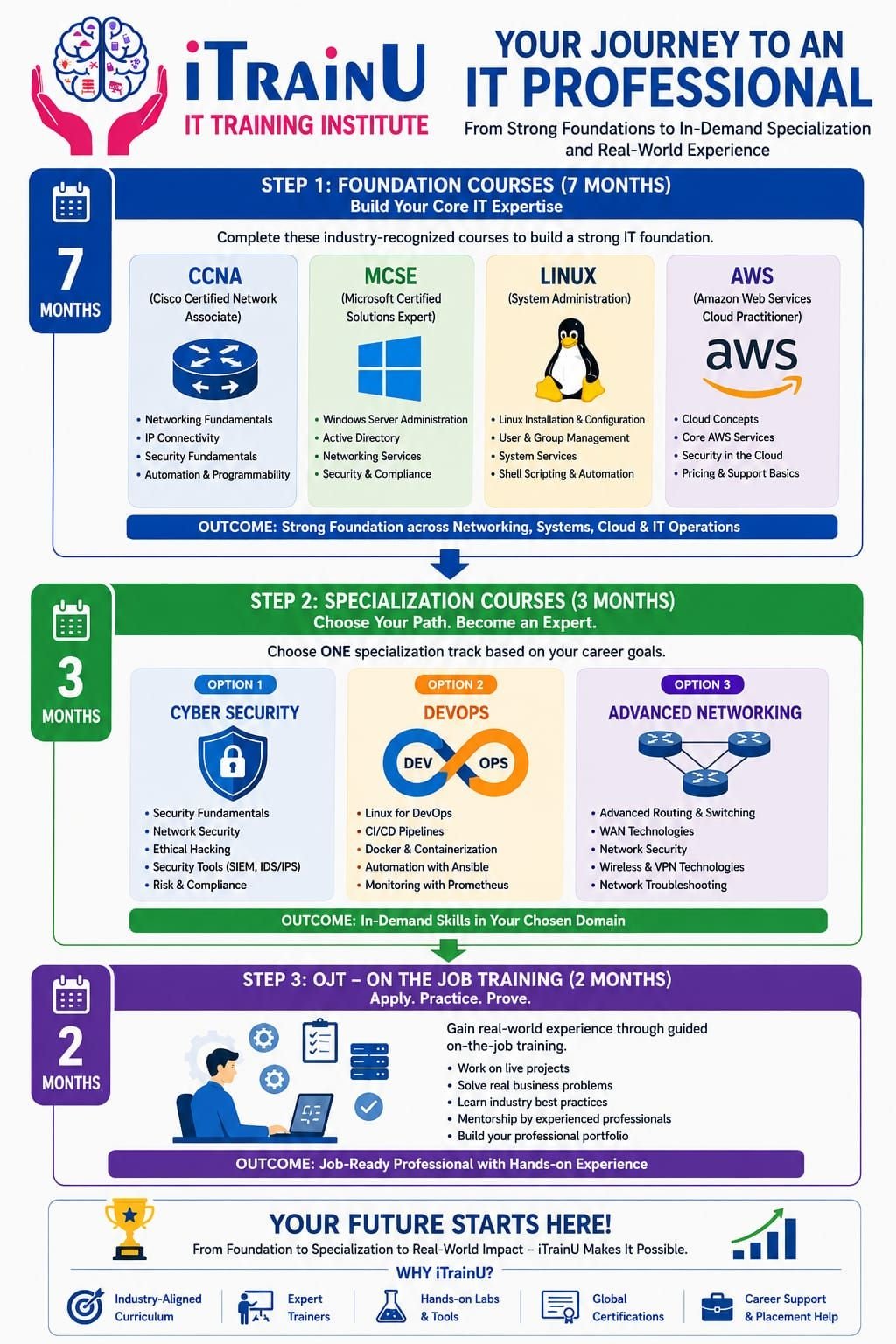
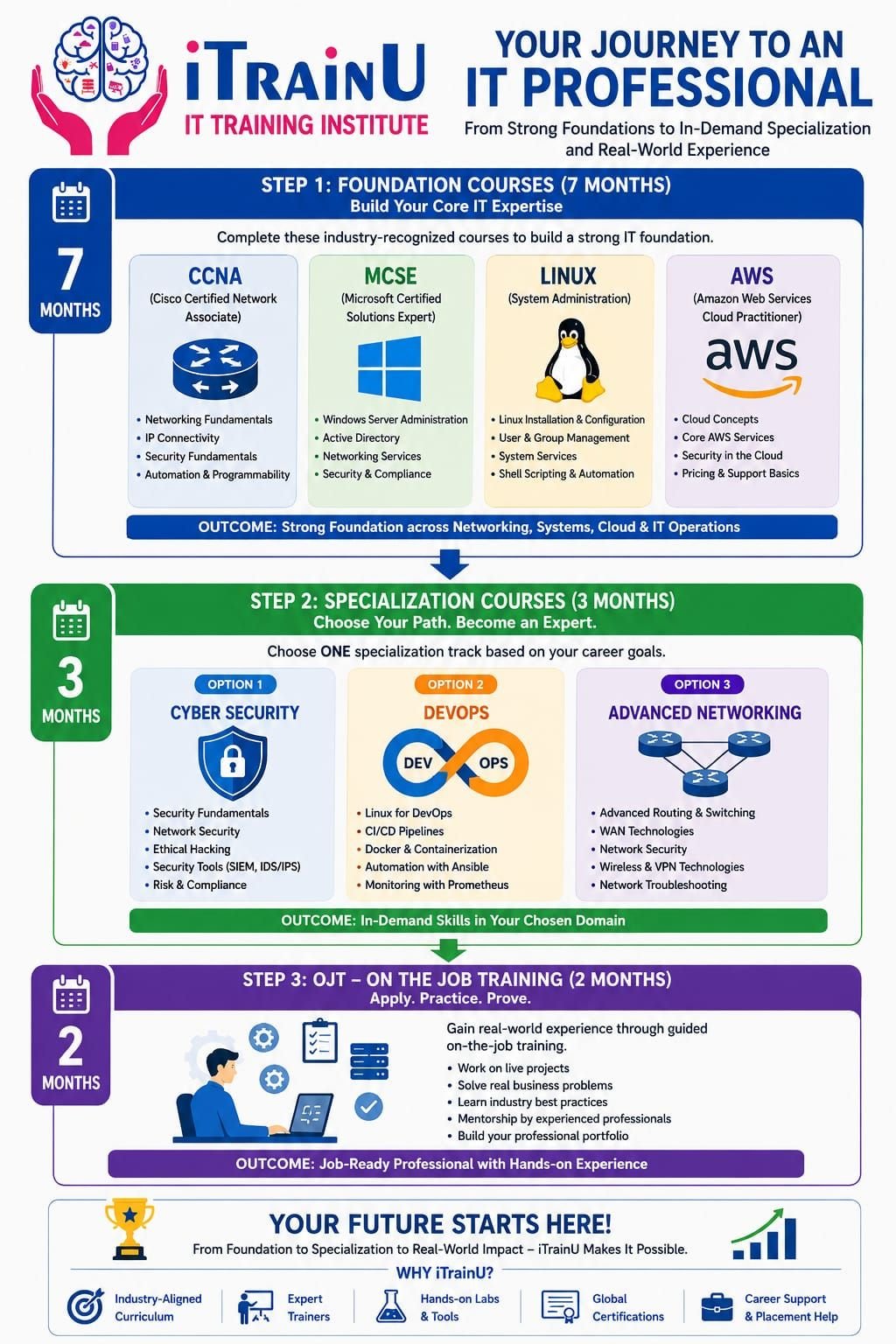
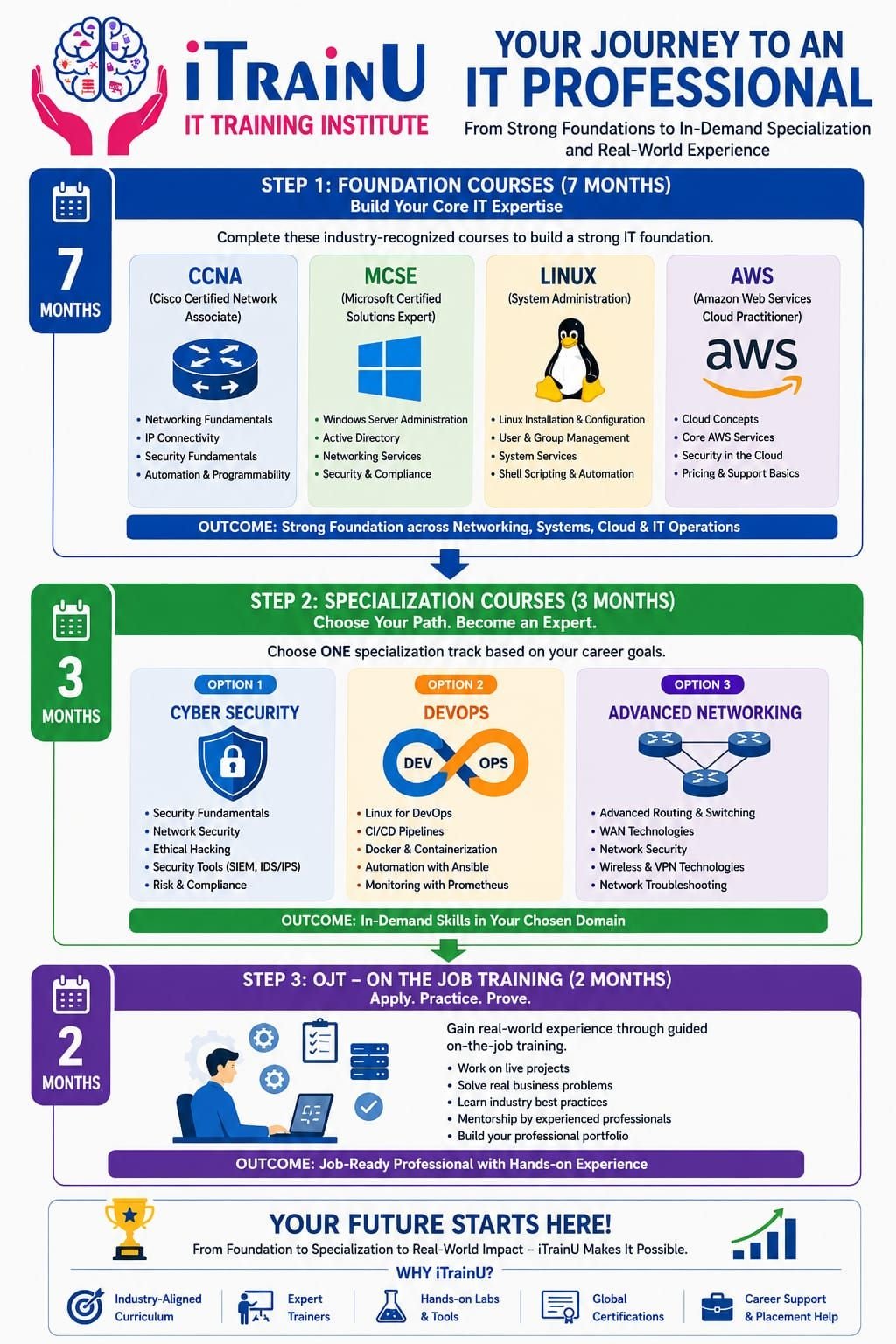
At iTrainU, we specialize in turning beginners into job-ready professionals through our industry-oriented IT training, focusing on the exact skills hiring managers want today.
Phase 1: The Foundation (Frontend Basics)
Before you can build complex applications, you must master the building blocks of the web.
1. HTML5 (The Structure)
HTML is a markup language used to define the layout of a webpage. You’ll learn how to use semantic tags like <header>, <footer>, and <section> to make your site accessible and SEO-friendly.
2. CSS3 (The Style)
CSS is a stylesheet language used for describing the presentation of a document. In 2026, you must focus on:
- Flexbox and Grid: Essential for creating responsive layouts.
- Tailwind CSS: A utility-first framework that is the industry standard for rapid UI development.
3. JavaScript (The Logic)
JavaScript is a programming language that allows you to implement complex features on web pages. It’s the "brain" of the frontend.
Phase 2: Mastering a Frontend Framework
In the modern world, writing raw JavaScript is rare. Most companies use frameworks to build scalable apps. React remains the king in 2026.

React is a… JavaScript library for building user interfaces. It allows you to create reusable components, making your code cleaner and easier to maintain.
Pro Tip: Don't just learn how to code; learn how to use AI tools. Use AI to generate boilerplate code, but make sure you understand the underlying logic. Our trainers at iTrainU emphasize "AI-assisted coding" to help you work 3x faster.
Phase 3: Backend Development & Databases
The backend is where the data lives. It’s the bridge between the user and the database.
1. Choose Your Language
You have two primary paths in 2026:
- Python (Django/Flask): Great for AI-heavy applications and easy to learn. Check out our Python Course Certification for a deep dive.
- Node.js (JavaScript): Allows you to use the same language for both frontend and backend.
2. Databases
You need to know how to store and retrieve data.
- PostgreSQL (SQL): Best for structured data and complex relationships.
- MongoDB (NoSQL): Best for flexible, document-based data.
What you control vs. What the database manages:
- You control: The data schema, the queries, and the API endpoints.
- The database manages: Storage optimization, data persistence, and indexing.
Phase 4: Cloud, DevOps, and Deployment
In 2026, a developer who can't deploy their own code is only half-ready. This is where you separate yourself from the competition.
Cloud Computing
You should have a basic understanding of cloud providers like AWS, Azure, or GCP. If you want to specialize, many students follow an aws solution architect study guide 2026 to get certified. Knowing how to host your React and Node.js apps on the cloud is a mandatory skill.
DevOps Basics
You don't need to be an expert, but you should know:
- Git & GitHub: For version control.
- Docker: For containerizing your apps.
- CI/CD Pipelines: For automating your deployments.
If this sounds interesting, you might want to learn how to become a devops engineer from scratch as your next career milestone after mastering full stack development.

Phase 5: Building Your "No-Degree" Portfolio
Without a degree, your portfolio is your resume. Hiring managers in 2026 want to see live, working projects that solve real problems.
Top 3 Project Ideas for 2026:
- AI-Powered Content Platform: An app that uses an API (like OpenAI) to summarize news or generate images.
- E-commerce Dashboard: A full-stack app with user authentication, a product catalog, and a payment gateway integration.
- Real-time Collaboration Tool: A chat app or a shared whiteboard using WebSockets.
At iTrainU, our internship programs allow you to work on practical live projects that you can proudly display on your GitHub.
How to Get Hired: The iTrainU Advantage
Getting the skills is only half the battle. The other half is getting through the door. This is where iTrainU's 100% placement assistance comes in.
- Mock Interviews: We prepare you for the technical and HR rounds.
- Resume Building: We help you highlight your projects over your lack of a degree.
- Direct Connections: We have a network of hiring partners looking for skilled developers in Indore and across India.
If you are interested in other high-demand fields, we also offer a specialized cyber security course in indore with placement, which is perfect for those who want to focus on protecting data rather than building apps.

Best Practices and Common Mistakes
Best Practices
- Build in Public: Share your learning journey on LinkedIn and Twitter.
- Master the Fundamentals: Don't skip HTML/CSS to jump straight into React.
- Read Documentation: AI can be wrong; the official docs are always right.
Common Mistakes
- Tutorial Hell: Watching 100 hours of videos without writing a single line of code.
- Over-Engineering: Trying to learn 10 frameworks at once. Pick one stack (like MERN) and master it.
- Ignoring Soft Skills: Being a great coder isn't enough; you must be a good communicator.
Pro Tips for 2026
- Prompt Engineering: Learn how to write better prompts for AI coding assistants. It will make you 2x more productive than traditional coders.
- Open Source: Contributing to an open-source project on GitHub is the "gold medal" for a non-degree developer.
- Networking: Join local tech meetups in Indore. A referral is often more powerful than an application.
Interview Questions: Full Stack Basics
- What is the difference between a GET and POST request?
- How does React’s Virtual DOM work?
- Explain the concept of "Middlewares" in Express.js.
- What is the difference between SQL and NoSQL databases?
- How do you ensure your web application is secure from common attacks?
Summary
The full stack developer roadmap for beginners in 2026 is all about practical application. By focusing on the frontend, mastering a backend language like Python or Node.js, and understanding cloud deployment, you can secure a high-paying job without a degree.
At iTrainU, we provide the hands-on labs, certified trainers, and placement support you need to make this transition successful.

Ready to start your journey? Contact us today and let’s build your future in tech together!
Meta Title
Full Stack Developer Roadmap 2026: Get Hired Without a Degree
Meta Description
Follow our 2026 Full Stack Developer roadmap for beginners. Learn HTML, CSS, JavaScript, React, and Python to get hired in tech without a degree. Includes iTrainU placement tips.
FAQs
1. Can I really get a tech job without a degree in 2026?
Yes. Modern tech companies prioritize your portfolio and skill set. Successful completion of an industry-certified program like those at iTrainU can substitute for a formal degree.
2. How long does it take to become a full stack developer?
With dedicated study (at least 20 hours a week), most students can become job-ready in 6 to 9 months.
3. Which language is best for backend in 2026?
Python and JavaScript (Node.js) are the most popular choices due to their versatility and large community support.
4. Do I need to learn Cloud Computing?
Yes. Understanding how to deploy and manage applications on platforms like AWS or Azure is a core requirement for modern developers.
5. Does iTrainU provide placement support for non-IT students?
Yes, we offer 100% placement assistance for candidates from all backgrounds, including those with year gaps or non-IT degrees.
Hashtags
#FullStackDeveloper #CodingRoadmap #CareerInTech #iTrainU #WebDevelopment #NoDegreeNoProblem #IndoreIT