The world of technology is moving faster than ever. By 2026, Artificial Intelligence (AI) and Machine Learning (ML) aren't just buzzwords; they're the foundation of almost every software we use. If you're a fresher or a student looking to break into the tech world, mastering Python for AI is your golden ticket.
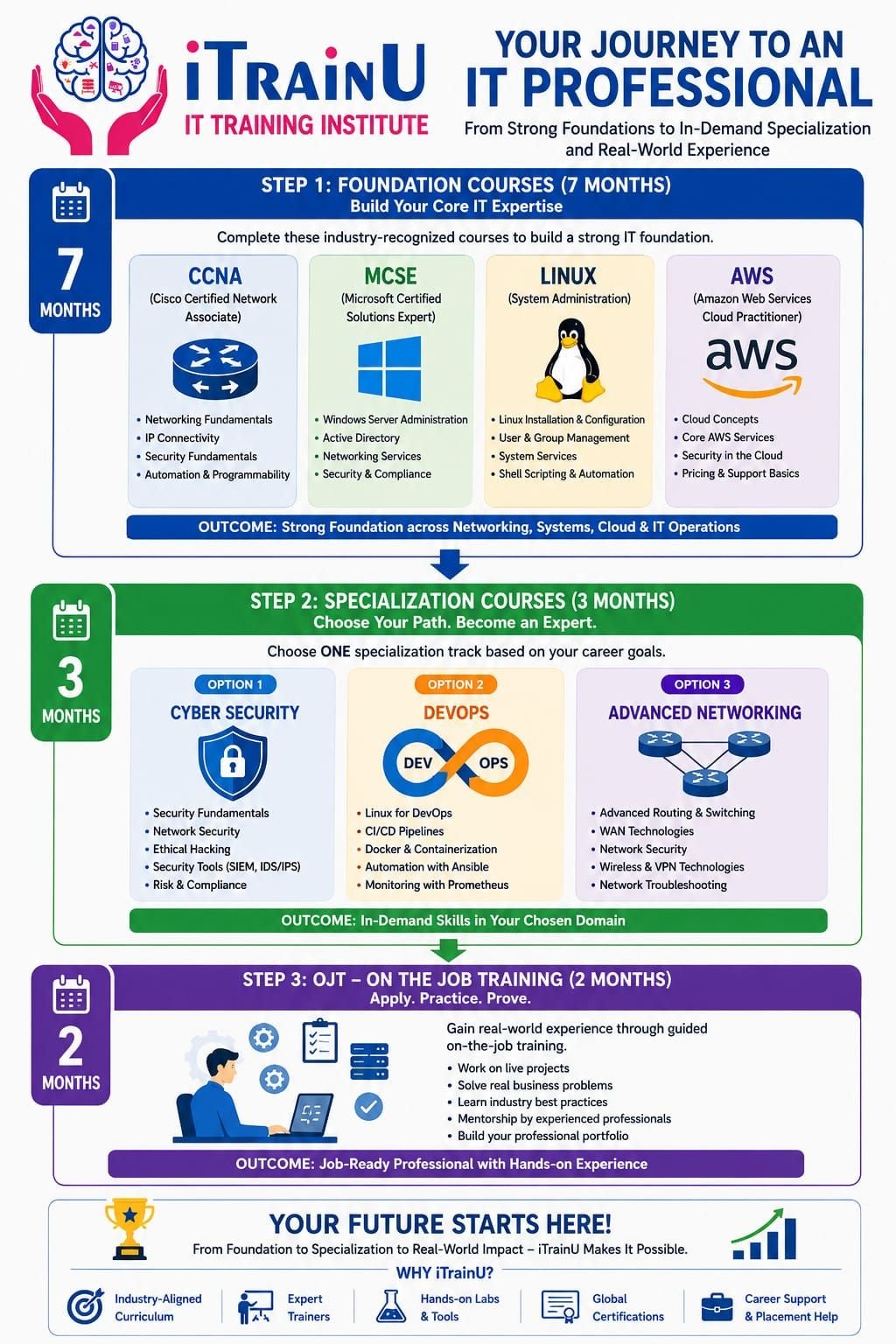
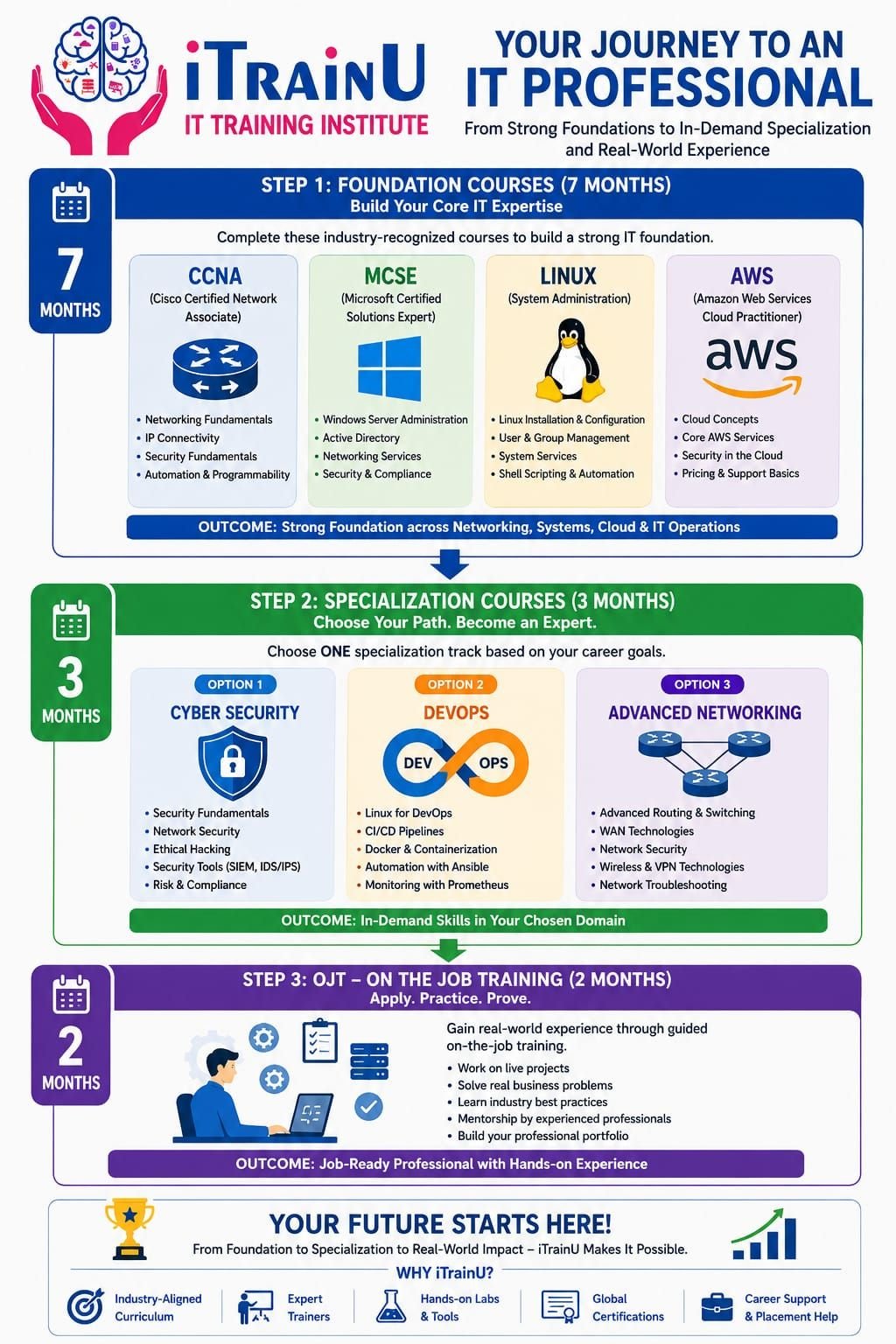
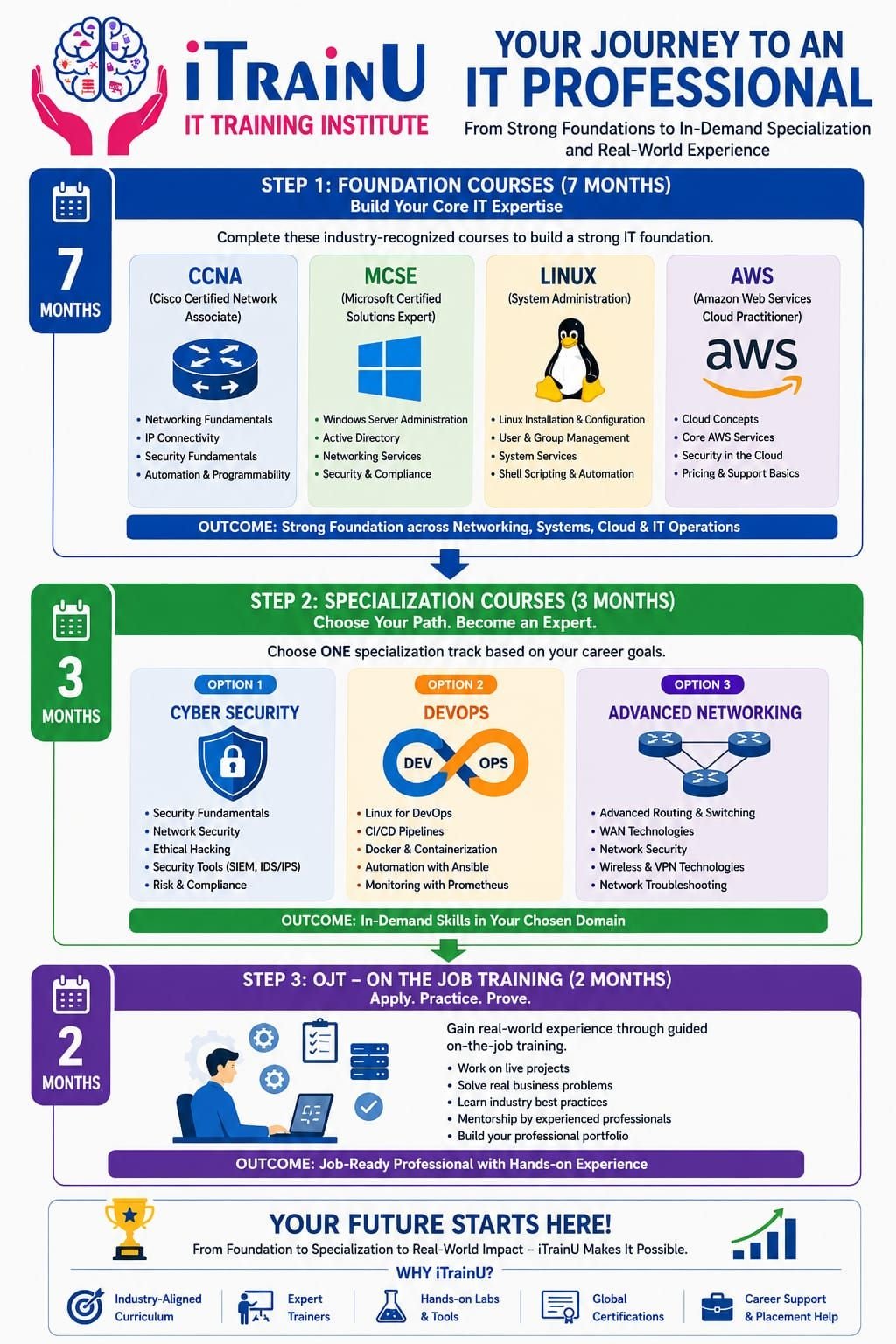
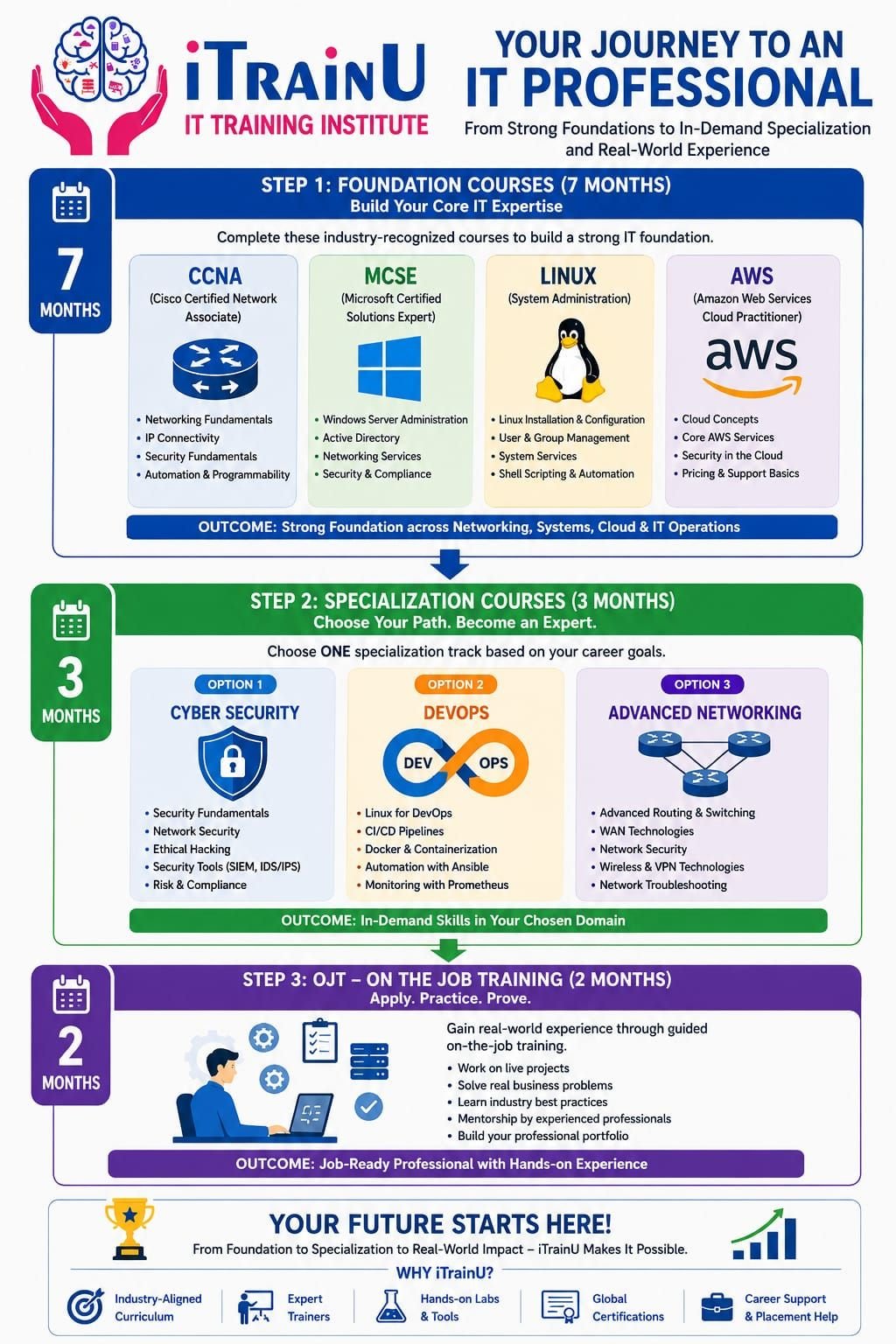
At iTrainU, we've seen thousands of students transition from absolute beginners to job-ready professionals through our hands-on labs and placement support. Whether you're interested in becoming an AI Engineer or looking for a full stack developer roadmap for beginners, Python is the starting point for it all.
This guide provides a clear, step-by-step path to mastering Python for AI and ML in 2026.
Why Python is the King of AI in 2026
Python is a high-level, interpreted programming language known for its simple syntax and readability. It’s the "language of AI" because of its massive ecosystem of libraries that do the heavy lifting for you.
- Easy to Read: It looks like English, which makes it perfect for beginners.
- Powerful Libraries: You don't have to write complex math from scratch.
- Huge Community: If you get stuck, someone has already solved your problem online.
Before we dive into the roadmap, remember that AI is just one branch of a modern IT career. Many of our students also explore how to become a devops engineer from scratch or look for a cyber security course in indore with placement to diversify their skills.
Phase 1: Python and Mathematics Foundations (Months 1-3)
You can't build a skyscraper without a solid foundation. In these first few months, you’ll focus on the "how" and "why" of programming.
What you need to learn:
- Python Basics: Syntax, variables, data types (strings, lists, dictionaries), and loops.
- Functions and Modules: How to write reusable code.
- Object-Oriented Programming (OOP): Understanding classes and objects is vital for modern AI frameworks.
- The Math: You don't need to be a math genius, but you should understand Linear Algebra (matrices), Calculus (derivatives), and Probability.
What you control: You write the logic and structure of your code.
What the provider manages: Python's interpreter handles the memory and complex hardware interactions.

Phase 2: Data Manipulation and Visualization (Months 4-6)
AI is only as good as the data you give it. In this phase, you learn to "talk" to data.
Key Libraries to Master:
- NumPy: Used for high-performance scientific computing and data analysis.
- Pandas: The "Excel of Python." It allows you to clean, filter, and manipulate large datasets easily.
- Matplotlib & Seaborn: Tools to create charts and graphs so you can see patterns in your data.
Problem: You have a messy dataset of 10,000 house prices with missing information.
Solution: Use Pandas to fill in the missing values and Seaborn to visualize which features (like square footage) affect the price the most.
Phase 3: Core Machine Learning (Months 7-9)
Machine Learning is a subset of AI that focuses on building systems that learn from data to make predictions.
What you'll build:
- Regression Models: Predicting a number (like a stock price).
- Classification Models: Categorizing data (is this email spam or not?).
- Clustering: Grouping similar items together (customer segmentation).
At iTrainU, our certified trainers guide you through live projects using Scikit-Learn. This is where you move from theory to building real-world applications.

Phase 4: The 2026 Edge – Generative AI & LLMs (Months 10-12)
By 2026, simply knowing "Linear Regression" isn't enough. You need to understand Generative AI.
The New Essentials:
- Deep Learning: Learning how Neural Networks work using PyTorch or TensorFlow.
- Large Language Models (LLMs): Understanding how ChatGPT and similar models are built.
- RAG (Retrieval-Augmented Generation): Connecting AI to your own private data.
- Deployment: Learning how to put your model on the web using FastAPI and Docker.
If you're also following an aws solution architect study guide 2026, you'll find that deploying these AI models on the cloud is a high-paying skill.
Real-World Example: Building a Basic Prediction Model
Here’s a small snippet of what Python code for Machine Learning looks like. This uses the scikit-learn library to predict a value.
# Import the library
from sklearn.linear_model import LinearRegression
import numpy as np

# Sample Data: [Square Footage]
X = np.array([[1000], [1500], [2000], [2500]])
# Target: [Price in USD]
y = np.array([200000, 300000, 400000, 500000])

# Create and train the model
model = LinearRegression()
model.fit(X, y)

# Predict the price of a 1800 sq ft house
prediction = model.predict([[1800]])
print(f"The predicted price is: ${prediction[0]}")
Best Practices and Common Mistakes
Best Practices:
- Write Clean Code: Use meaningful variable names like
house_priceinstead ofhp. - Version Control: Always use Git. It’s the industry standard for tracking changes.
- Documentation: Explain what your code does. Your future self will thank you.
Common Mistakes:
- Skipping the Math: If you don't understand the math, you won't know why your model is failing.
- Overcomplicating: Don't use a Deep Learning model when a simple Linear Regression will do.
- Ignoring Data Quality: "Garbage in, garbage out." Clean your data first!
Pro Tips for 2026
- Focus on MLOps: Companies in 2026 don't just want models; they want models that stay running. Learn the basics of Docker and FastAPI.
- Build a Portfolio: A degree is nice, but a GitHub repo with 3 solid projects (like a Chatbot or a Recommendation Engine) gets you hired.
- Stay Curious: AI changes every week. Follow researchers on Twitter (X) and read "ArXiv" papers.

Interview Questions to Prepare For
- What is the difference between Supervised and Unsupervised Learning?
- How do you handle missing values in a dataset using Pandas?
- What is 'Overfitting' and how can you prevent it?
- Can you explain the basic architecture of a Transformer model?
Summary
Mastering Python for AI and ML in 2026 is a marathon, not a sprint. Start with the basics, get comfortable with data, and gradually move into the world of Generative AI.
At iTrainU, we're here to bridge the gap between "learning" and "earning." Our programs include internships and practical projects that make you truly job-ready. Whether you are in Agra, Dubai, or London, our training is designed for your success.
FAQs
1. Is Python still relevant for AI in 2026?
Absolutely. Python remains the primary language for AI development due to its extensive libraries and massive industry support.
2. Can I learn AI without a computer science degree?
Yes! Many successful AI engineers are self-taught or come from specialized training institutes like iTrainU.
3. How long does it take to become an AI engineer?
For a fresher, a dedicated roadmap takes about 10 to 12 months to become entry-level proficient.
4. Does iTrainU provide placement support?
Yes, iTrainU offers guaranteed placement support and helps you prepare for interviews with top IT companies.
Our Training Locations
We provide the best IT training across the globe. Find us if you are looking for:
Azure Training in: Agra, Ahmedabad, Allahabad, Arlington, Atlanta, Augusta, Aurangabad, Austin, Australia, Bangalore / Bengaluru, Belfast, Bhopal, Bhubaneswar, Birmingham, Boston, Bristol, Calgary, Cambridge, Canterbury, Cardiff, Chandigarh, Charlotte, Chennai, Chicago, Cleveland, Coimbatore, Columbus, Coventry, Dallas, Dehradun, Delhi, Denver, Detroit, Dubai, Durham, Edinburgh, Edmonton, Fresno, Ghaziabad, Glasgow, Gurgaon / Gurugram, Guwahati, Houston, Hyderabad, Imphal, Indore, Jacksonville, Jaipur, Jammu, Jodhpur, Kanpur, Kansas, Kochi, Kolkata, Las Vegas, Leeds, Liverpool, London, Los Angeles, Lucknow, Ludhiana, Madison, Manchester, Meerut, Miami, Mississauga, Montreal, Morrisville, Mountain View, Mumbai, Mysore, Nagpur, Nashville, New Jersey, New York City, Noida, Nottingham, Orlando, Oxford, Patna, Philadelphia, Phoenix, Pittsburgh, Pondicherry, Portland, Pune, Raipur, Raleigh, Ranchi, Redmond, Richmond, Rochester, Sacramento, San Antonio, San Diego, San Francisco, San Jose, Seattle, Sheffield, Singapore, Southampton, Sunderland, Sunnyvale, Surat, Swansea, Tampa, Thane, Thiruvananthapuram, Tirupati, Toronto, Turner, Udaipur, Vadodara, Vancouver, Vijayawada, Visakhapatnam, Washington, New Delhi, Rajkot, Gandhinagar, Jabalpur, Gwalior, Navi Mumbai, Nashik, Kuwait, Bahrain, Oman, Malaysia, USA, UK.
AWS Training in: Same cities as above including best training institute for AWS in Bangalore, AWS training in Hyderabad, and AWS training in USA.
Cyber Security Training in: Indore, Mumbai, Delhi, and globally. We offer the best cyber security course in indore with placement.
Meta Title: Python for AI & Machine Learning Roadmap 2026 | iTrainU
Meta Description: Master Python for AI and Machine Learning with our 2026 roadmap for freshers. Learn NumPy, Pandas, PyTorch, and GenAI with iTrainU's hands-on labs and placement support.
#Python #MachineLearning #ArtificialIntelligence #PythonRoadmap2026 #iTrainU #DataScience #FreshersJobs